Social Icons

Friday, 1 November 2013

5 Ways Family Farming Can Alleviate Global Poverty


As improvement offices, universal examination foundations, non-benefit associations, and subsidizing and contributor groups press on to hunt down approaches to annihilate worldwide neediness and appetite, numerous now accept that the response might lie in family cultivating. Of the 1.2 billion individuals living in great destitution, an expected 800 million work in the agrarian division, and the greater part own exceptionally minor plots of area. The U.n. Sustenance and Agriculture Organization (Fao) has a High Level Panel of Experts on Food Security and Nutrition (Hlpe), and the board has inferred that 96% of all rural possessions in Africa measure less than ten hectares. In China and India alone, there are 189 million and 112 million smallholder ranchers individually with plots measuring less than two hectares.

These smallholder family cultivates assume an essential part in securing nourishment for their neighborhoods. As per a World Bank report, an increment in one percent in horticultural Gdp diminishes destitution by four times to the extent that the same rate build in non-farming Gdp. These families, then again, are additionally some of the aforementioned most at danger of yearning and neediness, and there must be a coordinated exertion to uphold their homesteads and the farming business in question.

Throughout the following two years, The Food Think Tank and the Fao will work together to highlight the essential part of family famers, and sway different associations to help family famers enhance their working conditions by improving soil health, securing water supplies, enhancing nourishment and expanding wages. Here are five routes, introduced by Food Thank and Fao, that Ngos and different associations can help family famers ease worldwide neediness.

1. Push feasible agribusiness strategies.

To expand yields, new cultivating techniques might be utilized, for example agroecology or natural increase. Consistent with an examination of 40 undertakings and programs, African smallholder agriculturists have encountered expanded yields because of reasonable strategies, for example agroforestry and soil preservation.

2. Help family famers in adjusting to environmental change and fleeting atmosphere variability.


As environmental change presses on to influence the farming business, family ranchers additionally exposed the weight of natural effects. Consistent with the Ifad, In Africa alone 75 million to 250 million more individuals will experience expanded water stretch by 2020 on account of environmental change. By supporting systems that instruct reasonable practices in area and water administration, associations can help minimize the impacts of year-to-year atmosphere variability as dry spell or flooding.

3. Elevate strategies to give smallholders lawful titles to their territory.

In excess of 1 billion destitute need secure rights to land; by getting lawful rights, agriculturists can expand profit, speculation in area and family pay.

4. Build access to nearby markets.


Since family famers process on a minor scale, they require chains of suitable scale. Associations, for example Community-Supported Agriculture (Csa) can give stages from which family ranchers have the capacity to offer their items straightforwardly to customers.

5. Shut the sexual orientation hole.


Right now, ladies don't have equivalent access to credit, land, inputs, and expansion administrations when contrasted with their male partners. By shutting the sex hole, 100 million to 150 million individuals could be lifted out of craving.

Family Farming: The key to alleviating poverty


After decades of failed attempts to eradicate hunger, development agencies, international research institutions, non-profit organizations, and the funding and donor communities now see family farmers as key to alleviating global poverty and hunger.
Recent estimates show that currently, 1.2 billion people in the world live in extreme poverty, and at least 870 million go to bed hungry every night. As the world gears up for the International Year of Family Farming in 2014, we're working with the U.N. Food and Agriculture Organization (FAO) to highlight effective ways to provide family farmers the tools they need to really nourish the world.

FAO's High Level Panel of Experts on Food Security and Nutrition (HLPE) reports that approximately 96 percent of all the agricultural holdings in Africa measure less than ten hectares. FAO Agricultural Census data shows that around 80 percent of agricultural holdings in sub-Saharan Africa and 88 percent of those in developing countries in Asia measure less than 2 hectares.
Family farmers play a crucial role in resolving world hunger, but they're also those most likely to fall victim to hunger and poverty. An estimated 800 million people living below the global poverty line work in the agricultural sector. In China and India alone there are respectively 189 million and 112 million smallholder farmers with plots measuring less than two hectares.
And yet, smallholder agriculture has great potential to reduce overall national poverty levels. According to a landmark World Bank report, an increase of one percent in agricultural GDP reduces poverty by four times as much as the same percentage increase in non-agricultural GDP.
Food Tank: The Food Think Tank is working with the U.N. Food and Agriculture Organization (FAO) to highlight the important role that family farmers play in the food system. Over the next two years, both organizations will work to shine a spotlight on how family farming can enhance soil health, protect water supplies, improve nutrition and increase incomes. Small-scale, family-run farms not only form the base of rural communities in both the developing and developed world and provide a large number of jobs, but they are also at the center of sustainable production.
Most of the world's farmers are smallholder and family farmers. But their knowledge and practices are not getting nearly the research and funding they need. Policymakers and business have focused on quantity over quality and have forgotten the important role family farming can play in improving nutrition.
Small-scale farmers can contribute significantly to the transformation of agriculture by managing land and water responsibly, protect water supplies, preserve and enhance biodiversity, and contribute to climate change adaptation and mitigation. A large study examining smallholder agriculture by the Department of Biological Sciences and Centre for Environment and Society at the University of Essex covered 286 projects, over 37 million hectares in 57 developing countries, and found that when sustainable agriculture was adopted, average crop yields increased by 79 percent.
"By working with family farmers to build on their knowledge in the development of sustainable agricultural practices, we can improve resilience in the food system -- including resilience to climate change, food price shocks, conflict, and natural disasters," says Barbara Gemmill-Herren, Programme Officer at FAO.
Food Tank and FAO present five effective ways for NGOs, the funding and donor communities, and policy-makers to invest more effectively in family farming:

Thursday, 31 October 2013

Impact of HIV/AIDS on agriculture

This Chapter presents the findings on the impact of HIV/AIDS on agricultural production. The impact of HIV/AIDS is analysed on the basis of the 3 categories (i) crop farming, (ii) livestock farming, and (iii) fishing. Most studies, which have been carried out on the impact of HIV/AIDS on the economy in general, have tended to focus on crop farming with less attention on livestock farming. In this study attempts were made to analyse the impact of HIV/AIDS on livestock farming.
The socio-economic dynamics in fishing communities unlike in crop and livestock farming communities make them more susceptible to HIV infection, and the impact of the epidemic. The impact of HIV/AIDS on fishing can, first and foremost, be appreciated by examining the basic characteristics of household members involved in fishing in the lake.

4.1. Impact of HIV/AIDS on crop farming

The impact of HIV/AIDS on the agricultural sector is quite visible in districts that have been hard hit by the epidemic. This has far reaching implications since agriculture accounts for 43% of GDP, 85% of export earning and 80% of employment. In addition, 85% of the estimated 22 million Uganda's total population live in rural areas and depend mainly on agriculture (GoU, 2000). Since most agricultural activities take place in rural areas, where farmers mainly using labour intensive techniques live, and have been much vulnerable to HIV/AIDS, it has resulted into decline of agricultural production in general, and food production in particular. Many communities whose source of income, food and general livelihood is agriculture have registered negative growth due to HIV/AIDS. In this study, empirical data on the impact of HIV/AIDS on agricultural production is analyzed.

Type of crops

In all the 4 districts, farmers were small landholders, majority owning less than 8 acres of land, and using labour intensive techniques in their cultivation; a hoe, pang and axe. Most of the households were growing crops on small portions of land, while big portions of land were not cultivated. Most of the crops both for food and sale were labour intensive crops, most susceptible to HIV/AIDS.
Tubers such as cassava, yams, sweet potatoes etc, which seem not to be much labour intensive such as bananas (matooke) were the dominant food crops in all districts except Mbarara. Legumes such as beans, groundnuts, peas were the second dominant crops followed by cereals. In areas of Mbarara and Rakai, which are matooke growing areas, it is becoming evident that HIV/AIDS has had its toll as only less than a half of the households in respective areas reported matooke as their dominant food crop.
In the four districts, there were no marked cash crops. The food crops doubled as crops for sale, but also among few households. Most households, which, sold off crops mainly cereals (rice, millet, and maize), were in Lira and Iganga. In the districts of Mbarara and Rakai very few households had crops to sell.
As a proxy indicator of the impact of HIV/AIDS, respondents were asked whether there were certain crops, which they used to grow, but were no longer growing in the last 10 years preceding this study. Several households (64.8%) indicated that there were certain crops, which they used to grow in the past, but were no longer growing. Most of these households (i.e., over a tenth, 12.8% had stopped growing cereals such as millet, sorghum, maize etc. The dominant reason for not growing such crops was cited to be lack of labour in almost a fifth of the sampled households (19.2%). In a few households it was as due to pests and diseases as a result of poor management, infertile soils and lack of market.
In a situation where there are small landholders, it would be expected that much if not all the land would be under cultivation in crop growing communities. However, the study findings revealed that a big proportion of the households (60.1%) had unused land or gardens that had reverted into bush due to lack of manpower. When this was cross tabulated by districts, majority of such households were in Lira (82%) and Rakai (64%) districts.
Social maps drawn by community members in Lira indicated a number of households than had been affected by HIV/AIDS related deaths, with gardens that had reverted to bush. Households with unused land that was formerly under cultivation attributed it to lack of labour, lack of money to hire labour and conversion of cultivable land into grazing pastures etc.

Trend/pattern of agricultural production

Household respondents were requested to comment on the household's agricultural production in the last 10 years so as to link with possible effects of HIV/AIDS. Majority of the household respondents (76.9%) revealed that their respective households had experienced decreased agricultural production in the last 10 years.
A number of factors, all related with HIV/AIDS explain the general pattern/trend of decreased agricultural production such as depletion of labour force and increased workload due to increased dependency burden, loss of skills and knowledge, and income disruption.
Several studied households (66.9%) mentioned shortages of labour to be behind decreased agricultural production in their households. In almost a fifth of the sampled households, labour shortages were directly linked to HIV/AIDS related deaths.
Accordingly, AIDS undermines agricultural systems, affects the nutritional situation and food security of rural families. Families face declining productivity as well as loss of knowledge about indigenous farming methods and loss of assets (Focus, 2001). FAO estimates that in the 25 most-affected African countries, AIDS has killed seven million agricultural workers since 1985. It is forecasted that 16 million people will die of AIDS in the next 20 years. Labour intensive farming systems with a low level of mechanisation and agricultural input are particularly vulnerable to AIDS. Given the fact that AIDS is concentrated among the 15 - 45 years old, who are most able bodied, then agriculture suffers most in terms of production and market for the accruing products.
For women who are the main producers generally shoulder the burden of caring for the sick. This diverts their energies from agricultural production and general work that would provide income. The result is household food insecurity, declining nutrition and health. Thus, the decline in women's contributions to agriculture, as a result of their own illness or that of family members, reduces agricultural productivity and household food security. This is especially devastating given women's key role in the agricultural work force and in the production of most subsistence food crops.
Labour loss and depletion as a result of HIV/AIDS partly occurs due to high dependency burden, coupled with structural changes in family structure. Situations where frail grandparents are increasingly assuming roles of able-bodied persons to care for the children of their late sons and daughters are common. In such households, food production declines, and the family becomes perpetually food insecure. A household case in Ngara area, Nyakayejo illustrates the point.
Case 1: Food Insecurity in a Grandfather Headed Household
Paulo, a widower aged 80 years old lives in Ngara village, Nyakayejo Sub-county in Mbarara district with 5 grandchildren who are orphans aged 5,7,8, years who were left behind by his daughter and a son who died of AIDS. Paulo narrates, "I used to be self-reliant, hardworking, supplemented my little income from farming with carpentry work, but when my children died, leaving behind children and nobody else to take them up except me, my life changed. I am not only a grandfather to these children, but a father and a mother at this advanced age.... I am now sick and cannot afford to dig or to do carpentry work any more after an operation I underwent, coupled with old age. It puts me in great pain, for I don't know what will happen to these children once I die as they all depend on me".
The old man has a banana plantation, but the biggest part is overgrown with weed due to lack of enough manpower. Together with the orphans, they cannot carry out meaningful cultivation even though the orphans are not attending school. There has been sharp reduction in food for consumption available for the family as the old man continued narrating, "even now when I am still alive, we do not have enough to eat...you can see that young one (pointing to the youngest orphan) is gloomy not because he is sick or has been punished, but because he has not eaten anything since morning". As a coping mechanism, the household feeds on one meal (supper) a day, and take some local porridge for lunch.
The above case illustrates how HIV/AIDS has changed the family structure, with frail grandparents assuming responsibilities of "fathers and mothers", but yet cannot meaningfully execute such roles of fending for the family. The case also points to occurrences of food insecurity among HIV/AIDS affected households and psychological trauma. When the grandparent is preoccupied with "what will happen" to his grandchildren after his death, it points to, among others, the need for psychosocial support, and deliberate programmes to help such families.
The relationship between change of family structure as a result of HIV/AIDS and reduction in agricultural production is more evident in this study as all households headed by grandparents or children themselves, reported decreased agricultural production.
Declined agricultural production and consequently food insecurity were markedly prevalent in grandparent and child headed households than in other households. A case of a grandmother headed household illustrates the trend of agricultural production in such households.
Case 2: Declined agricultural production and food insecurity in a grandmother headed household
Agellina, a widow and grandmother aged 65 years old lives in Kakuto Parish, Kigayaga village, Rakai district. In a small mud and wattle iron roofed house, lives 10 people (4 males and 6 females), 8 of whom aged below 14 years old. All the nine other members of the household are her grandchildren who were orphaned by AIDS. Agellina had produced 4 children, three of whom died of HIV/AIDS related illnesses in 1990s together with their spouses, leaving behind 9. Six of her grandchildren including the eldest who is 14 years old have dropped out of school partly due to lack of other school necessities (i.e., save for tuition, which is covered under Universal Primary Education), and to supplement the grandmother's failing input on the small banana plantation.

The family depends on a small plantation for it food requirements and beans grown in the banana plantation. The family has some land of 2.5 acres reserved for cultivation, but can only cultivate less than an acre. According to Angellina "the family does not have labour to tend to both the plantation and the garden of beans", and hence have been exposed to weevil and pest infestation.

The family has witnessed declined food production and consumption as well. The children playing in the courtyard looked hungry and malnourished. The grandmother in touching emotions observed, "we only have one meal a day, and also not adequate...we let the small ones first eat...a type of life that they were not used to".
Angellina is planning to sell part of 2.5 acres of land so as to raise some income for meeting the basic necessities including food for the family.
The above case shows how changes have occurred in family structure due to HIV/AIDS and the attendant consequences of decreased agricultural production. This finding is supported by findings from secondary sources. For instance, according to UAC (March 2001), Uganda has the highest proportion of AIDS orphans in the whole world. By the end of 1999 UAC estimated that over 1.7 million children below 15 years had lost one or both parents to AIDS.
However, a dimension in the above case that did not feature in the case of Paulo in Mbarara is weevil/disease infestation due to poor management of gardens. Some of these diseases were as a result of poorly or unattended gardens/banana plantations due to labour depletion resulting from of HIV/AIDS. Some of the diseases and pests included banana steak virus mainly in Kyotera county, coffee wilt, beans bacterial, fungal and viral, sweet potato caterpillars and cassava green mites etc. Cassava mosaic which used to be a problem in most areas was reported to be on the decrease due to the introduction of new resistant/tolerant varieties from the National Agricultural Research Organization (NARO). Also in the above case, a new dimension of selling the family property such as land in order to cope with the new demands arising from HIV/AIDS emerges.
A lot of literature points to similar situations in several parts of the country that have been hard hit by HIV/AIDS. For instance, FAO (2001) summarised the impact of AIDS on a once wealthy rural agricultural community of Gwanda in Rakai district. HIV/AIDS was reported to have resulted into loss of labour, poor land use, increased pests and plant diseases, livestock decline and food insecurity. All these put together have resulted into massive poverty, and undermining of sustainable development. Apart from reduction in incomes accruing from the agricultural sector, decline in food production which, culminates into food insecurity has adverse impact on PLHA in particular. Decline in production of local foods implies that the nutritional requirements for PLHA are not met, which affects their life span.
Further, the affected and afflicted family, and the wider community feel the impact of HIV/AIDS through reduced agricultural production. Culturally, when death occurs in most parts of Uganda, community members take off time for burial and in some instance observing the mourning period i.e., not attending to their gardens. Eeven in majority households where a member had not died in the last 10 years, reported decreased food production.
Both quantitative and qualitative data revealed that as a result of HIV/AIDS, crop-farming households were faced with the following:
  • Loss of time
  • Labour shortages
  • Selling household property
  • Loss of knowledge and skills
  • Exhaustion of funds
  • Land and property grabbing
  • Increased dependants

What Effect Did Agriculture Have on the Way of Life of the Early People?


The effect that agriculture had on the way of life of the early people is that it gave them more time to do their crafts such as pottery. They also had more time to study astronomy. what your view? drop your suggestion and answer. thank you

Tuesday, 29 October 2013

THE CHALLENGE TO AGRICULTURAL EXTENSION SERVICES


There is already ample evidence that the epidemic has changed the very fabric of the farming population, bearing implications for agricultural extension services. Apart from the routine difficulties faced in daily work in rural areas by agricultural extension staff in developing countries, the challenges that most agricultural extension services face are mostly of a technical and logistic nature. Some examples are insect pest invasions, outbreaks of serious diseases, locust attacks, severe climatic effects, natural disasters, or intensive campaigns for an increase in agricultural production. The challenge currently posed by the HIV/AIDS epidemic to agricultural extension organizations in sub-Saharan Africa, however, is quite unusual as it affects both staff and clientele and involves human emotions to a depressing degree, that is, in addition to technical aspects. This challenge has at least three major dimensions. First, the very nature of the extension work; second, the impact of the epidemic on the extension organization itself and its staff; and third, the impact of HIV/AIDS on the clientele of extension services. A brief analysis of these three dimensions is in order.
Nature of the extension work

Since most of the population of the countries, hardest hit by AIDS, lives in rural areas, a large number of people affected by HIV/AIDS in sub Saharan Africa are, directly or indirectly, engaged in farming. The workers, who have the most frequent contact with the small-scale farmers, are the field extension agents. The extension services, by their very mandate and character, are supposed to deal with traditional, mostly illiterate rural households, in order to provide them with technical advice not only on agricultural technologies but also on relevant subjects like farm input supply, credit, marketing and farm management. Most of the extension staff themselves have their genetic roots in rural families. They travel frequently in rural areas, many times spending nights away from home, and being offered “hospitality” in villages due to their status. Also, they are in touch with so many widows forced into farming because of their husbands’ death, who need extension advice. Thus, the extension workers have ample opportunities of getting involved with multiple sex partners. All these factors expose the extension staff to the maximum risk of HIV infection, especially with their very limited knowledge of the epidemic.
Impact on extension and partner institutions

What challenges does agriculture face today?


This Synthesis Report catches the many-sided quality and differing qualities of farming and Akst [agricultural Knowledge Science and Technology] crosswise over planet locales. It is based the worldwide and five sub-worldwide reports that give prove for the reconciled examination of the primary concerns important to accomplish improvement and maintainability objectives. It is formed in two parts that address the essential invigorating address: in what manner can Akst be utilized to decrease appetite and neediness, enhance country occupations, and expedite evenhanded naturally, socially, and financially reasonable advancement? The eight cross-cutting subjects incorporate: bioenergy, biotechnology, environmental change, human health, Nrm [natural Resource Management], exchange and markets, conventional and neighborhood learning and group based advancement, and ladies in agribusiness and is composed in two substantive parts. In the first part we recognize the present conditions, tests and alternatives for activity that shape Akst, while in the second part we concentrate on the eight cross-cutting subjects.

The International Assessment of Agricultural Science and Technology for Development (Iaastd) reacts to the broad acknowledgment that notwithstanding critical logical and innovative accomplishments in our capability to expand horticultural profit, we have been less mindful to a portion of the unintended social and natural outcomes of our accomplishments. We are currently in an exceptional position to consider these results and to framework different approach alternatives to meet the tests ahead, maybe best described as the need for nourishment and occupation security under progressively obliged ecological conditions from inside and outside the domain of farming and globalized financial frameworks.

This prevailing acknowledgment is interfaced straight to the objectives of the Iaastd: how Agricultural Knowledge, Science and Technology (Akst) might be utilized to lessen yearning and destitution, to enhance provincial occupations and to expedite evenhanded naturally, socially and monetarily feasible advancement. Under the rubric of Iaastd, we distinguish the significance of Akst to the multifunctionality of horticulture and the convergence with other neighborhood to worldwide concerns, incorporating misfortune of biodiversity and environment administrations, environmental change and water accessibility.

The Iaastd is novel in the history of agrarian science appraisals, in that it evaluates both formal science and engineering (S&t) and neighborhood and accepted learning, addresses creation and benefit as well as the multifunctionality of horticulture, and distinguishes that various viewpoints exist on the part and nature of Akst. For numerous years, rural science kept tabs on conveying part advances to build ranch level benefit where the business and institutional plans put set up by the state were the essential drivers of the reception of new innovations. The general model has been to enduringly develop, decrease homestead door costs and externalize costs. This model drove the remarkable accomplishments of Akst in streamlined nations after World War Ii and the spread of the Green Revolution starting in the 1960s. However, given the new challenges we go up against today, there is expanding distinguishment inside formal S&t associations that the present Akst model requires amendment. The usual order of things is no more extended an alternative. This prompts reconsidering the part of Akst in attaining improvement and manageability objectives; one that looks for additional serious engagement crosswise over different perspectives and perhaps conflicting methodologies in ways that can illuminate and propose procedures for movements empowering to the numerous capacities of horticulture.

Thursday, 24 October 2013

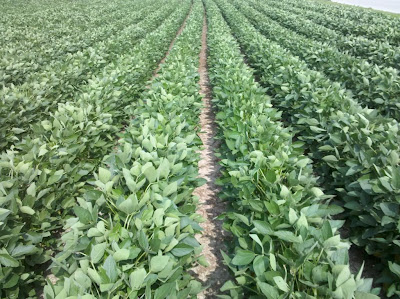
How to Grow Soybeans in Nigeria

Soybeans is one of the shoddiest wellspring of protein and is extremely fundamental for support of both grown-ups and kids. Soybeans is extremely simple to develop and does well in most dirts in  Nigeria. We need to examine How to develop Soybeans in Nigeria however before then, we should take a gander at the regale and benefit potential of soybeans generation in Nigeria.

Soyabean-Farm-in-Nigeria

Soybean Farm in Nigeria

Soybeans is a vegetable that has been being used hundreds of years back and as of late picked up passage into the Nigeria cultivating ring. Every twelve-months, an exceptional number of the planet's sum soybeans handling are prepared into diverse sorts of soybean dish and oil. These dishes and oils are extremely key for youngster and mature person health much the same. It is all over the place in the business sector and offers in millions.

Separated from human utilization, soybeans is utilized for the generation of nutritious creature bolsters of various types in the business sector. Pretty nearly 98 percent of the soybean dish that is pounded is further transformed into creature nourish with the equalization used to make soy flour and proteins. Of the oil portion, 95 percent is depleted as palatable oil; the rest is utilized for modern items, for example greasy acids, cleansers and biodiesel.

Why is soybeans so handy? Soybeans is one of the few plants that furnishes a complete protein as it holds each of the eight amino acids crucial for human health. Soybeans holds the most noteworthy measure of protein that could be discovered in any vegetable or grain.  Soybeans additionally holds nice measure of starches, fat, dietary strand, minerals, and vitamins. It is just as utilized for medicine of numerous endless sicknesses.

Soybeans is for sure the powerhouse of goodies and developing it means growing great sustenance and influential drug for human and creatures. Nobody who take part in such cultivating that wouldn't grin home with riches.

Soybeans is one of the item you can send out and make dollars yet tragically, Nigeria is not yet sending out this profitable item notwithstanding being the most astounding maker of this harvest in Africa. The excuse for why is since we are not yet handling enough. The planet showcase for soya is about $42 billion and Nigeria is as of now transforming soya worth of $86 million, would you be able to now see the hole.

Assuming that an agriculturist could take it to the following level and start to homestead this item in an exceptionally expansive amount, he will have enough to fare and make outside cash from the over $40 billion worldwide yearly advertise. Regardless of the possibility that you choose to offer generally, there is tremendous advertise for it in Nigeria as well. Numerous items in the business sector are continuously made with soybeans, for example soya milk and soya vegetable oil.

Soybeans-Seeds
Cost of soybeans in Nigeria for every metric tonne is about N100,000. Provided that you handle 20 metric tonnes in a season in Nigeria, you will be making N2,000,000. You can process 20 metric tonnes of soybeans in Nigeria with N700,000. That means in a season you will be making N1.3 million naira from the humble speculation of N700,000! In this way, how would you begin with soybeans cultivating?
Related Posts Plugin for WordPress, Blogger...
Subscribe Us

Get free daily email updates!

Follow us!